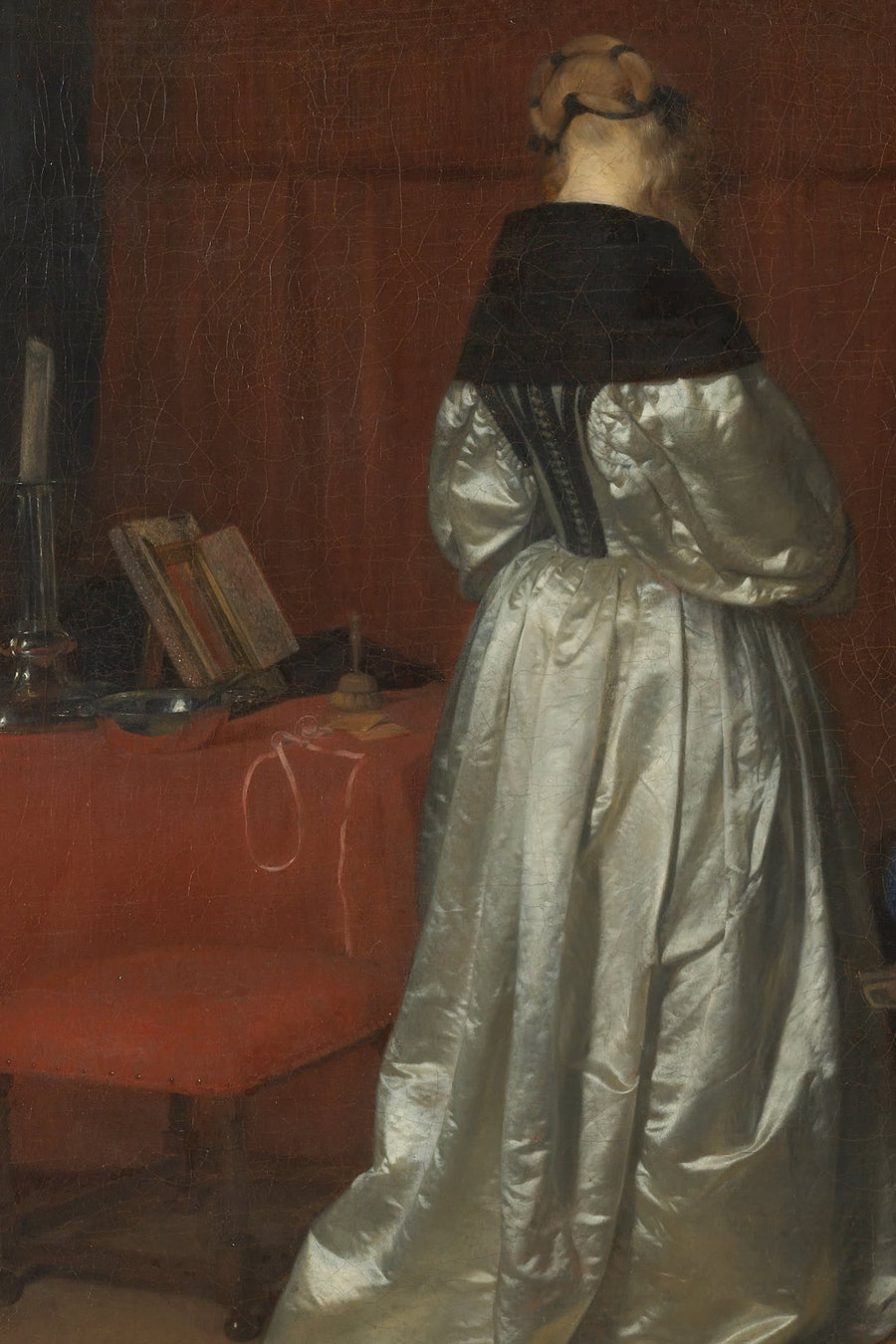
Duchess Silk vs Charmeuse Silk: What’s the Real Difference?
One holds its shape. One flows. A simple guide to duchess satin, charmeuse and the label check that tells you whether either is silk.


Two shiny fabrics. Two very different personalities. One makes a bow stand tall; the other slips softly through your fingers. You do not need to speak textile to understand the difference.
THE MATERIAL
Silk = fibre
What the threads are made from.
THE WEAVE
Satin = weave
How the threads cross each other.
THE FABRIC TYPE
Duchess or charmeuse
Two satin fabrics with different feel and movement.
For the fuller fibre-and-weave story, visit our guide to satin, silk and charmeuse. Start with the picture, then feel your way through the guide.
Duchess satin vs charmeuse, at a glance

| What you notice | Duchess satin | Charmeuse |
|---|---|---|
| Feel | Usually firm and substantial | Usually soft and supple |
| Movement | Holds broader, firmer folds | Falls into soft folds and gathers |
| Often used for | Structured gowns, bodices and shaped bows | Slips, blouses, scarves and flowing dresses |
| Fibre | Can be silk, rayon or polyester | Can be silk, rayon or polyester |
These are typical differences. Yarn, finish and construction can change the feel. Shine alone will not tell you which fabric you have.
Meet duchess satin and charmeuse
Duchess satin: the one that holds its shape
Duchess satin, also spelled duchesse, is a dense fabric with a smooth, lustrous face and a firm feel. Its close construction gives it body. Picture broad folds, a sculptural bow or a full skirt that stands away from the wearer.
The SILKNOW textile thesaurus describes its densely packed satin construction. You do not need to memorise the technical details: the useful word is structure.
A little history makes that easier to picture. On 20 November 1947, Princess Elizabeth wore Norman Hartnell’s ivory duchesse satin wedding dress. Britain was still rationing clothing, and she received 200 extra coupons for it. The seed pearls and 13-foot silk tulle train belong to a remarkable story, told by the Royal Collection Trust.

Charmeuse: the one that flows
Silk charmeuse feels softer and falls more fluidly. Its shiny face catches the light; its reverse is duller. Some versions have a slightly textured crepe back.
Think of a scarf pooling in your palm, a softly gathered scrunchie or a dress that moves as you walk. The useful word here is drape: how fabric hangs and falls.
The Museum of Fine Arts, Boston’s CAMEO database describes charmeuse as lightweight satin-weave fabric. It lists silk, polyester and rayon as possible fibres. “Silk charmeuse” specifies silk; “charmeuse” alone does not.
Try this: the gentle swatch test
- Let it fall. Hold the fabric by one corner. Does it keep a firm fold or flow down softly?
- Gather a little. Bring it together between your fingers. Duchess usually makes fuller, firmer folds; charmeuse makes softer gathers.
- Read the label. The feel helps you choose the effect. The composition tells you the claimed fibre content.
Shopping online? Ask for a swatch or a short video of the fabric moving. A still photograph can show the colour beautifully while leaving the movement a mystery.
Does either name guarantee real silk?
No. “Duchess” and “charmeuse” describe fabric types. Neither name guarantees silk. Merriam-Webster’s duchesse definition includes silk and rayon, and polyester versions are sold too.
If you want silk, look for “100% silk” in the composition. If it is missing, ask the seller. A beautiful shine, a high price or a familiar fabric name cannot confirm the fibre.
A small extra: what does “momme” mean?
Momme, often written “mm” in silk listings, measures fabric weight. It does not mean millimetres or prove silk content.
For example, Dharma Trading sells 12-momme and 19.5-momme silk charmeuse. Those are individual fabrics, not fixed weight limits. Use weight as one clue, alongside the feel and drape.
Which one belongs in your piece?
Want it to stand up? Try duchess satin. Its body can help a bow, bodice or skirt hold a clear shape. The pattern, lining and construction matter too.
Want it to move softly? Try charmeuse. Its fluid drape suits flowing clothes and gentle gathers.
For a scrunchie, think about the folds you like. Softer fabric gathers gently around elastic; firmer fabric gives a more substantial shape. Neither is a universal winner. Let the finished effect guide you.
Meet Moosi’s silk creatures
A little silk, a little everyday wonder. Meet our four silk pieces:
- Wildpetal: maroon plaid silk, five flower petals and a cream lace edge.
- Mushbloom: a round ruffle with a cherry edge and a silk tie, without elastic.
- Candy Pop: a big, puffy scrunchie in 100% mulberry silk charmeuse.
- Candy Dot: skinny 100% mulberry silk charmeuse for braid ends and low ponies.
Look closely at their folds, shapes and details, then choose the creature that feels like you.
Find looking-after notes in Material & care, or ask us about a particular piece. We will tell you plainly.
Questions people ask
Is duchess satin always heavier than charmeuse?
It usually feels firmer and has more body. The exact weight varies, so compare the actual cloth instead of treating the name as a weight guarantee.
Which is better for a wedding dress?
Choose for the shape you want: duchess satin for structure, charmeuse for flow. Compare swatches with your pattern and lining.
Can shine tell me whether a fabric is silk?
No. Silk and synthetic fabrics can both shine. Check the composition and ask the seller if it is unclear.
Does all charmeuse have a crepe back?
No. Some versions do. Read the description of the particular fabric you are buying.
Two fabrics, two personalities
Duchess holds a line. Charmeuse follows a movement. Check the fibre, feel the folds, and choose what belongs in your piece. There is room for both kinds of wonderful.
Keep wandering through the Moosi Journal.
Sources and further reading
This guide draws on the Royal Collection Trust, SILKNOW textile thesaurus, MFA Boston’s CAMEO database, Merriam-Webster and the linked fabric examples from Dharma Trading.
Thanks for reading slowly.
Got a question you want us to chase down? Write to moosi.care@gmail.com and it might become the next page in the Journal.